Categories
Story

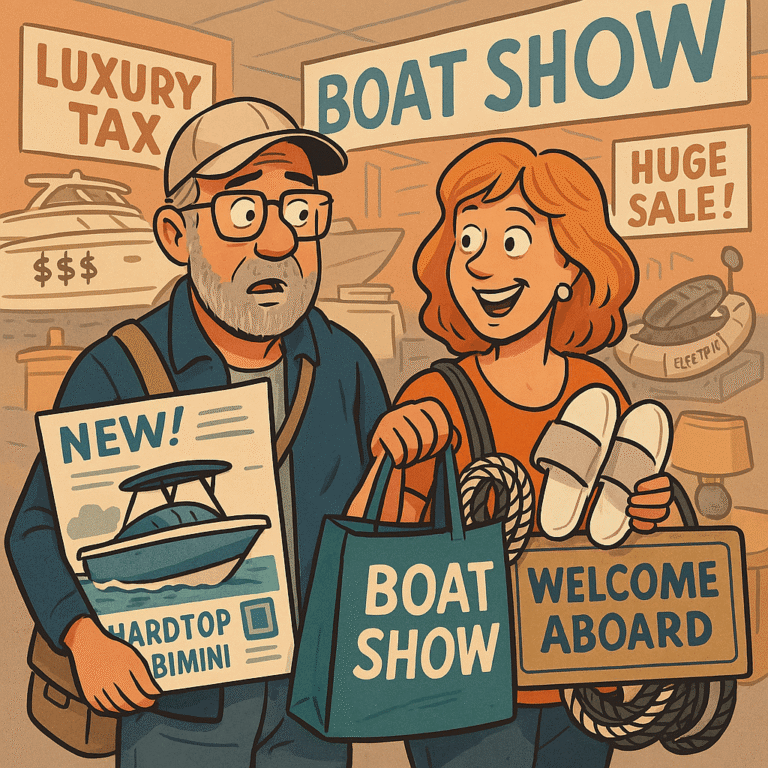
Toronto Boat Show 2026: Steps, Seminars, Sticker Shock & a French Toilet

Every January, like migrating salmon or people who line up for new iPhones, I make my annual pilgrimage to the Toronto Boat Show. And as always, I brought my brother‑in‑law — a man who does not boat, does not want to boat, but will happily walk 12,000 steps indoors and attend seminars like he’s earning continuing education credits in “Marine Curiosity Studies.”

This year’s show?

A little different.

A little wild.

A little… luxury‑tax‑induced chaos.

Day 1: The “Scouting Report” (AKA: What’s New, What’s Ridiculous, What’s Canadian)

If you wanted to buy a luxury boat this year, congratulations — this was your show.

Up to 261 boats sold, and not a single one under the “my mortgage is crying” price bracket.

Why the frenzy?

Because the government is rolling out a luxury tax, and nothing motivates Canadians like the phrase:

So people bought.

And bought.

And bought.

Next year, manufacturers will probably bring nothing but $250,001 boats, and then act surprised when nobody buys them. The golden rule seems clear:

But I digress.

Fishing Boats: The Lund Rollercoaster

Lund was offering $15,000 discounts on fishing boats that used to cost $65,000 and now cost $125,000.

I love Lund.

But come on.

Who is paying six figures for a fishing boat?

There must be someone out there with a very understanding spouse and a very forgiving bank.

Canadian Boats: Built Like Hockey Players

Ranger was sold out.

Canadian manufacturers were flexing.

If you want a boat that lasts forever, buy Canadian — we build boats the way we build hockey players:

• tough

• reliable

• and able to survive a hit from a submerged log without complaining

My Quest: The Fold‑Down Hardtop of Dreams

I wasn’t there for a new boat.

I was on a mission:

Find a hardtop that folds down for trailering or squeezing through the Erie or Lachine Canal.

Not a replacement.

Not a fancy upgrade.

Just something that wouldn’t cost more than the boat itself.

Did I find it?

Not exactly.

But I did find:

• a seminar from Steven Bull on the Welland Canal

• the revelation that for $200 the canal staff will handle the ropes

• and the installer from Sideshift (Patrick) who actually knew what he was talking about

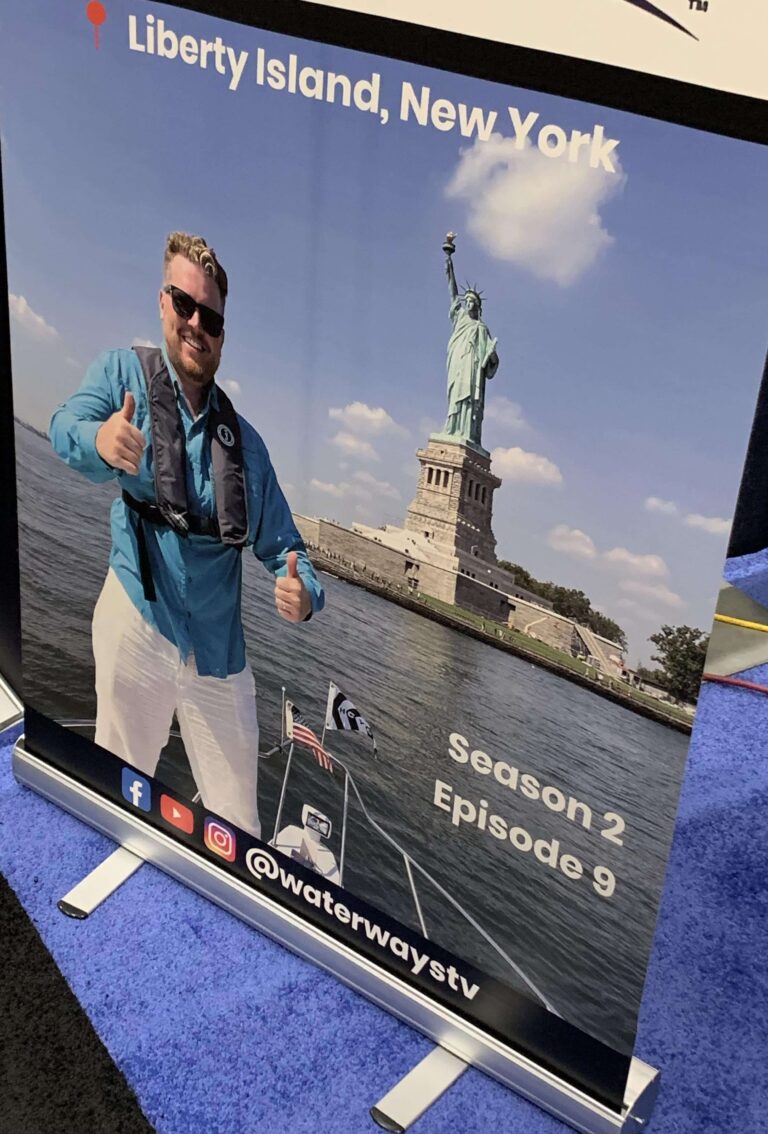
My boat even made cameo appearances around the show — posters, swim platforms, you name it.

It was like being mildly famous, but only to people who know what a stern drive is.

By the end of Day 1, I had my 12,000 steps and a head full of ideas.

Day 2: The Wife Arrives (Brace Yourself)

I thought bringing my wife would be fun.

Was I mentally stable when I made that decision?

Debatable.

She humoured me through the boats:

• pontoons in

• cuddies out

• cheap boats out

• expensive boats in

But then she saw the marketplace.

I have never seen a woman move that fast without a sale sign at Winners.

Suddenly we were buying:

• white deck flip‑flops (Montreal chic, apparently)

• a “Welcome Aboard” mat

• new fenders from a Canadian company that actually priced things sanely

• woven bags to store the fenders (because apparently my storage methods were “embarrassing”)

This was all her.

I would never have bought any of it.

But she said I “needed to do better,” and honestly, she wasn’t wrong.

My Big Purchase: A French Electric Toilet

Yes, I bought a toilet.

An electric water toilet with a macerator, no less.

From France.

Why?

Because it was half the price of the American ones and twice as fancy.

The best part?

The vendor didn’t have any in stock, so he drove back the next day to bring me one personally.

He carried it to my car.

I didn’t lift a finger.

That’s customer service.

The Ukrainian Dinghy That Tempted Me

There was a Ukrainian inflatable dinghy with an electric motor that kept calling my name.

Perfect for camping.

Perfect for exploring.

Perfect for pretending I’m in a Bond movie but with more sunscreen and fewer explosions.

I’m still thinking about it.

The Only Thing Missing

The only thing the show didn’t have?

My AI — BoatIQ.

Next year, maybe it’ll be the star attraction.

Or at least the thing that tells me whether buying a French toilet was a stroke of genius or a future plumbing adventure.

Categories
Digital Boat

Digital Boat: Creating a Trusted History Report for Boats

One of the long‑term goals for Digital Boat is to become the boating world’s version of a trusted history report — the kind of system that gives buyers and owners confidence by showing a boat’s past in clear, verifiable detail.

How It Would Work

  • Central Record: Each boat that opts in gets a digital profile.
  • Data Sources: Information comes from Garmin logs, NMEA 2000 networks, OpenPlotter, and manual entries.
  • History Tracking: Instead of just relying on memory or paperwork, Digital Boat could show:
    • Engine hours and service history
    • Battery health and charging cycles
    • Fishing logs and trip history (if the owner chooses to share)
    • Upgrades and retrofits (electronics, safety gear, power systems)
  • Ownership Transparency: When a boat changes hands, the new owner can see a verified history — not just what the seller remembers.

Why It Matters

  • For Owners: A living logbook that proves the value of upgrades and helps with smarter maintenance.
  • For Buyers: Confidence that the boat has been cared for, backed by real data.
  • For the Community: Shared, anonymous data builds a bigger picture of reliability, fishing patterns, and best practices.

What Makes Digital Boat Different

This isn’t just about recording history. Digital Boat adds intelligence:

  • Trust: A verified record of maintenance, upgrades, and performance.
  • Smarts: AI insights that help you fish better, manage power more efficiently, and avoid breakdowns.
Categories
Digital Boat

Our Time and the Digital Boat Vision

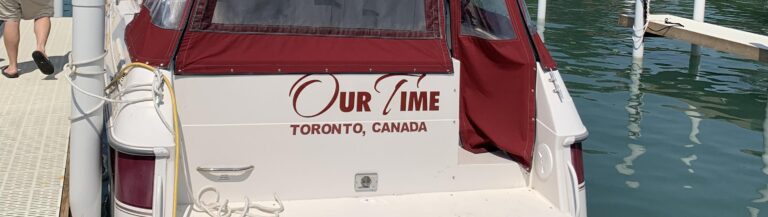
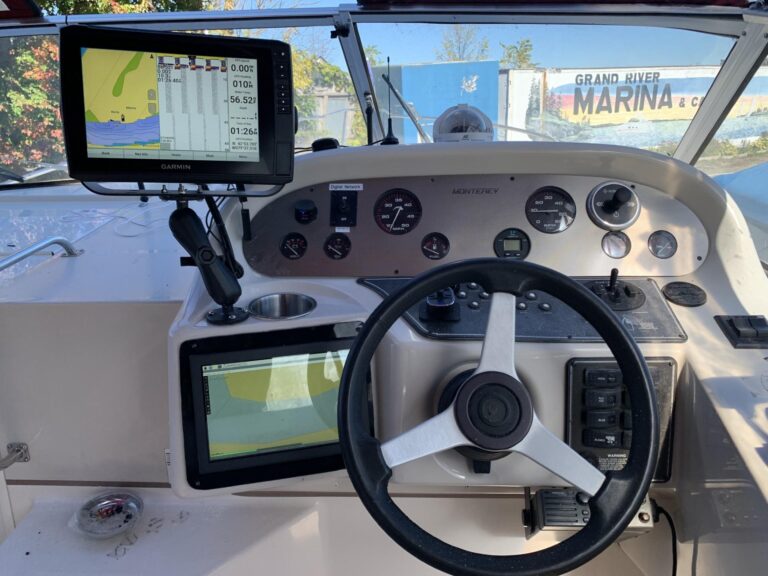
When I bought Our Time, I knew she was more than just a 1994 Monterey with good bones. She was going to be my platform — the boat where I could experiment, learn, and prove out a bigger idea. That idea is Digital Boat.

Our Time: The Test-bed

On Our Time, every upgrade is a step toward the future:

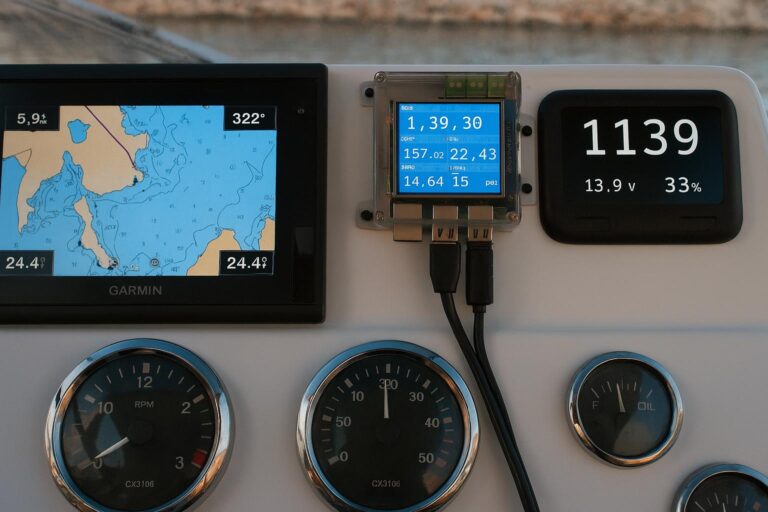
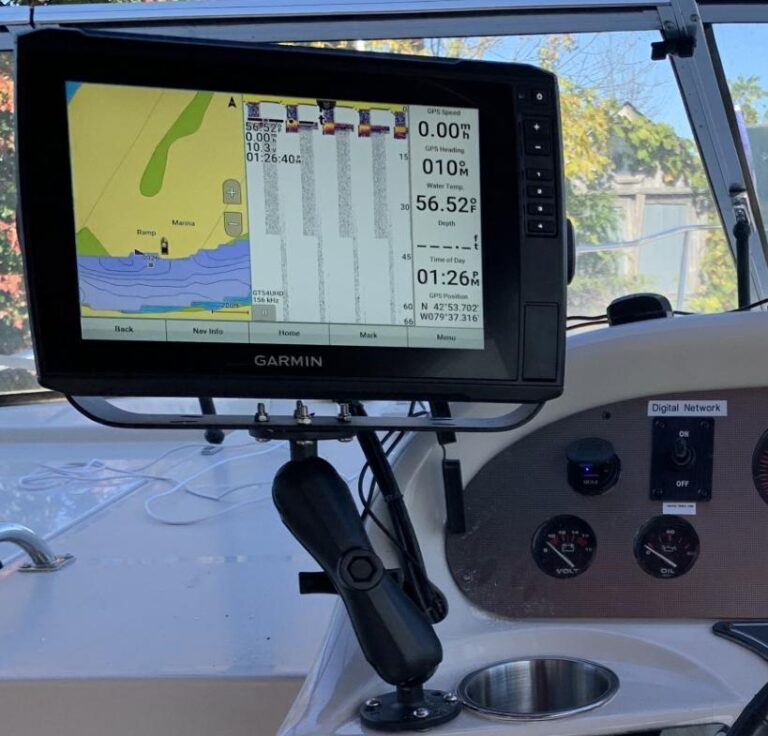
  • A Garmin chart-plotter replacing the old Lowrance
  • An NMEA 2000 backbone tying electronics together
  • OpenPlotter running on a Raspberry Pi with a PICAN-M hat
  • The CX5106 converter turning analogue gauges into digital data

These aren’t just gadgets. They’re building blocks. Each one adds to the story of how a boat can evolve from analogue to digital without losing its soul.

Digital Boat: The Collective Vision

Digital Boat takes what I’m building on Our Time and scales it into a shared system for all boaters. The vision is simple:

  • Centralized Database: Every Garmin log, every OpenPlotter track, every catch waypoint feeds into a common structure.
  • AI Integration: Artificial intelligence analyzes the data — spotting patterns, predicting conditions, and offering smarter recommendations.
  • Shared Insights: Boaters contribute what they choose, and in return, gain access to collective knowledge. No one’s secret spot is exposed, but the fleet as a whole gets smarter.

From Catch Maps to a Digital First Mate

On Our Time, I’ll start by mapping catches — turning way-points and trolling paths into heatmaps that show where walleye hit, by season, depth, and lure.

Digital Boat takes that further:

  • Predictive Fishing: AI suggests starting points based on weather, water temp, and historical catches.
  • Automated First Mate: The system monitors engine health, battery status, and bilge activity, alerting you before problems happen.
  • Trip Prep & Power Management: Digital Boat generates checklists, balances loads, and ensures you’re ready before you even leave the dock.

The Bigger Picture

Our Time is my proving ground. Digital Boat is the collective vision — a community intelligence system that blends analogue reliability, digital dashboards, and AI‑driven insights.

Every trip I take adds to the database. Every boater who joins makes the system smarter. Together, we’re not just upgrading boats — we’re redefining what it means to be on the water.

Digital Boat Road-map: From Our Time to a Smarter Boating Community

Phase 1: Prove It on Our Time

  • Install and connect the core gear: Garmin, NMEA 2000 backbone, Raspberry Pi with OpenPlotter, CX5106 converter.
  • Start logging every trip: way-points, trolling paths, catches, engine data, and power usage.
  • Build the first dashboards: speed, depth, RPM, voltage, and catch notes.
  • Goal: Show that one boat can collect, organize, and use its own data to fish smarter and boat safer.

Phase 2: Build the Personal Fishing Database

  • Export Garmin logs and OpenPlotter data into a simple, structured format.
  • Organize catches by date, depth, lure, speed, and conditions.
  • Create maps and heat zones that show where fish were caught and under what circumstances.
  • Goal: Turn raw trip logs into a personal playbook that improves with every outing.

Phase 3: Add AI Insights

  • Use AI to scan the database for patterns:
    • Best depths by season.
    • Most productive trolling speeds in different weather.
    • Lure performance over time.
  • AI begins to suggest starting points, speeds, and setups before each trip.
  • Goal: Move from “recording history” to “predicting success.”

Phase 4: Share the Knowledge (Digital Boat Community Database)

  • Create a central database where boaters can choose to share their logs.
  • Protect privacy: no one’s exact fishing spot is revealed, but patterns (like depth, speed, lure type) are shared.
  • Contributors get access to collective insights — the more data, the smarter the system.
  • Goal: Build a trusted knowledge base that grows with every boater who joins.

Phase 5: Automate the First Mate

  • Expand beyond fishing:
    • AI watches engine temp, battery health, and bilge pump activity.
    • Sends alerts before problems become breakdowns.
    • Generates trip prep checklists based on planned outings.
    • Manages power automatically (switching between solar, alternator, and shore).
  • Goal: Digital Boat becomes a true “digital first mate” — always watching, always learning, always helping.

Phase 6: Scale and Evolve

  • Add more sensors and integration (radar, weather, autopilot).
  • Build a simple app or web dashboard so any boater can access Digital Boat.
  • Grow the community — more data, more insights, more value.
  • Goal: Digital Boat becomes the go‑to platform for smarter, safer, and more enjoyable boating.
Categories
Digital Boat

Digital Boat Lesson: Timing Is Everything

One of the hardest lessons I’ve learned since buying Our Time is that timing matters. Boats are never “done.” There’s always another upgrade, another checklist item, another shiny piece of gear that promises to make life easier. But if you’re not careful, you can spend the whole season with a wrench in your hand instead of a rod or a wheel.

The trick is balance—knowing when to sail, when to maintain, and when to build.

The Rhythm of the Boating Year

  • Spring = Maintenance & Launch Prep
    This is the time for the basics: oil changes, filters, impellers, bottom paint, zincs, safety gear checks. It’s not glamorous, but it’s what keeps you safe and ensures the season starts smoothly.
  • Summer = Sailing & Enjoyment
    Once the boat is in the water, the priority is using it. If the sun is shining and Erie is calm, that’s not the time to be buried in wiring diagrams. Save the big projects for later. Do the small fixes at the dock, but don’t let them steal your weekends.
  • Fall = Maintenance & Winterization
    Before haul‑out, it’s time to close the loop: winterize systems, inspect wear and tear, and make a list of what needs attention. This is when you capture the lessons of the season and set yourself up for success next year.
  • Winter into Early Spring = Project Season
    This is when the dreaming and building happens. Solar panels, lithium batteries, open‑source chart-plotters—these belong in the off‑season. You’ve got time to experiment, test, and refine without missing a perfect day on the lake. By spring, you can test your work before launch.

The Balance

  • Urgent vs. Optional: Fix what keeps you safe and moving. Save the “nice‑to‑haves” for downtime.
  • Now vs. Later: Ask yourself, “Will this project make today’s trip possible—or am I just avoiding the water?”
  • Routine vs. Innovation: Maintenance keeps you afloat. Projects push you forward. Both matter, but they belong in different seasons.

Digital Boat Lesson

“Boats will always need work. The secret is timing: maintain in spring and fall, sail in summer, and save the big projects for winter.”

Categories
Digital Boat Story

Fishing Smarter: Three Trips, Two Friends, and One Limit

It was that time of year again — when the fishing forums light up, the big water of Lake Erie calls, and everyone’s talking about catching their limit in just a few hours. Mr. Rhybak and I weren’t about to miss out.

Trip One: The Garmin Joins the Crew

Our first outing with the new Garmin fish finder felt like stepping into the future. For the first time, we could log where we caught fish, track our trolling paths, and start building a picture of the lake.

We didn’t know the hot spots yet, so we did what every smart angler does: we followed the fleet. A dozen boats clustered together, rods bending, nets flashing. We slid into the pattern and started catching a few ourselves.

The setup was classic Erie:

  • Two lead core lines down the middle at different depths
  • Two swimwiz planer boards pulling lines out wide
  • A mix of spoons and worm harnesses

The depth was right, the bait was right, the distance was right. But the speed? Not so much. Our Time with her 454 MerCruiser just didn’t want to troll slow. We were running 3.4 mph — too fast for walleye. We caught fish, but not limits.

Trip Two: The Drift Sock Revelation

A week later, Mr. Rhybak showed up with a piece of low‑tech genius: a drift sock. Basically a parachute for the water, it slowed the boat down to a perfect 1.7–2.4 mph.

The difference was immediate. As soon as we deployed the sock, the rods started bouncing. Suddenly, the Garmin’s tracks lined up with steady catches. We didn’t need a kicker motor, and with the sock, the old 454 sipped fuel all day.

High‑tech Garmin plus low‑tech drift sock = limits in the cooler.

Trip Three: Midweek Madness

By mid‑summer, the bite was off the scale. I couldn’t wait for the weekend. I called Mr. Rhybak and said, “Let’s go fishing.”

He gave me the excuse: “I have to work for a living.”
I booed him. “I’ll drive. We’ll be back before dinner.”

Sure enough, he found a way to leave early. We launched, set lines, and within a few hours we both had our limits. No fuss, no marathon day — just a quick strike mission made possible by the combination of logged Garmin tracks, the drift sock, and a little midweek determination.

The Lesson

Fishing smarter isn’t about choosing between high‑tech and low‑tech. It’s about using both. The Garmin gave us the data. The drift sock gave us the control. Together, they turned a fast old cruiser into a walleye machine.

Who says low tech doesn’t work, eh?

Categories
Digital Boat

Alternative Power: Welcoming Our Timeand it’s Now

The new year has arrived, and so has the boat show. With it comes a fresh look at my checklist—and this year, alternative power is at the top.

Bigger boats often carry generators, and I like the idea. But hauling extra fuel on board isn’t my first choice. At the marina, shore power makes everything easy: coffee, microwave, cooking. But at anchor, you’re on your own. A generator can bridge the gap, but I wanted to explore other options.

From YouTube to the Bimini

After watching a number of YouTube series, I realized you can build a decent setup with lithium batteries and solar panels. Shore power can top off the batteries, and solar can keep them going when you’re away.

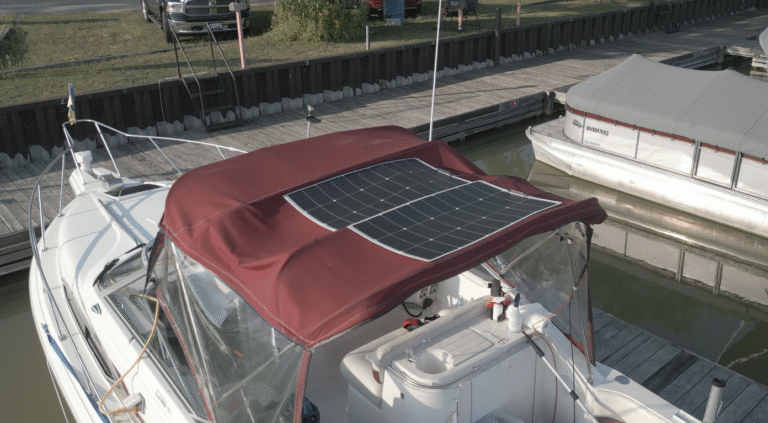
I found a pair of 120‑watt flexible solar panels on Amazon. They were inexpensive, and I was skeptical. If I got 100 watts combined, I’d be happy. Sure enough, performance was okay—not great—but they met expectations.

Next came the batteries. I went to AliExpress and found what looked like an amazing deal: 150Ah batteries for $22. Of course, that was the old bait‑and‑switch. By the time you clicked through the options, the real price was closer to $80. Buyer beware. Still, I bought them, and they paired up fine with the panels.

To protect the system, I added a solar controller—again from AliExpress, half the price of Amazon. No free delivery, import charges not clear, but it worked.

Building the System

Installation was simple. I used two‑sided Gorilla tape to fasten the panels to the bimini, ran the wires down into a battery box, and housed the controller and batteries there. All summer, the load on the batteries was solid. I never had to top them off with shore power—solar did the trick.

For now, I’ve kept this system separate from the motor and house batteries. I also added a 2000W inverter, which let me run a number of household items on board. It’s good to know what’s possible.

Looking Ahead

The next step is to combine the batteries into a 24‑volt system and use a DC‑to‑DC charger with a switch to toggle between the house battery and the solar bank. I’m still working out the details, but the important part is this: I now have power without extra gas.

Digital Boat Lesson

“Alternative power isn’t just about saving fuel—it’s about independence. Solar may not be perfect, but it kept me powered all summer.”

Categories
Digital Boat

Open Source Winter–Spring Project: Building Digital Boat

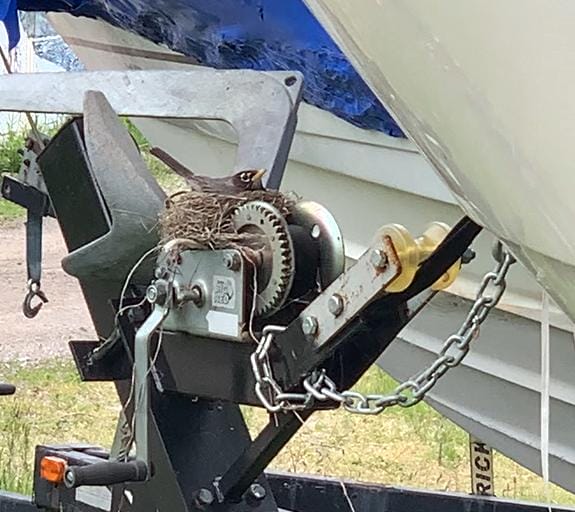
As winter slowly gives way to spring, I find myself itching to get back on Our Time. But a Robin claimed my boat trailer as her nesting spot this spring, and I had to postpone launching until her chicks had safely flown away. The unexpected delay turned into a gift of time—I used it to finish deploying OpenPlotter and wiring up the digital backbone. By the time the boat was ready to roll, both the robin family and my electronics were set for new adventures.

I’ve been following a number of open source efforts where boaters are building their own chart plotters. The beauty of these projects is that they can combine proprietary products, house them under one system, and make them communicate through an NMEA 2000 network.

My Garmin is great, but it doesn’t always play nicely with other peripherals. So I decided to build my own solution. All I needed was:

  • A Raspberry Pi 4B
  • A 12‑volt power supply
  • A way to connect the Pi to the NMEA 2000 network

I chose the Copperhill PICAN‑M hat and built my OpenPlotter system. And it worked!

Connecting the Dots

To access the Raspberry Pi, I used my smartphone with RealVNC server. By setting the Pi as a Wi‑Fi host, I could connect my phone, bridge the internet, and integrate that connection into the NMEA 2000 network. That meant I could update plotters and even the Garmin before any voyage.

Once installed, I discovered my boat already had an NMEA 2000 backbone—but with proprietary Lowrance fittings. I was glad I’d invested in a generic system. With it, I could:

  • Capture and log engine data through the CX5106
  • Integrate Garmin with other devices
  • Add modern GPS and AIS via the Signal K software

A Digital Boat

With OpenPlotter running, Our Time now has:

  • AIS receiver
  • GPS receiver
  • Wi‑Fi host
  • Internet connection via smartphone
  • NMEA 2000 integration
  • Bluetooth streaming to the radio

Add in solar panels and lithium batteries, and the digitization of the boat is well underway. This is more than just a winter project—it’s the foundation for automation, smarter systems, and a connected future on the water.

I think I’ll call it Digital Boat.

Digital Boat Lesson

“Open source isn’t just for coders—it’s a way to unlock hidden potential in your boat and bring all your systems together.”

Categories
Digital Boat

Annual Pilgrimage: The Toronto Boat Show

Every January, my brother‑in‑law and I make our annual trip to the Toronto Boat Show. He and I go way back—we were friends before I met his sister (now my wife). We’ve always shared interests: me with technology and boating, him with contests and games. It’s a good match, and this show has become our tradition.

This year marked six months since I bought Our Time, so I was especially excited. Not just to see the shiny new boats, but to check out the vendors, take in a few seminars, and maybe even pick up some wisdom for my growing checklist.

Meeting Familiar Faces

One highlight was catching up with Steve Bull, the former owner of Our Time and a familiar face from TV. He was giving a talk on renting boats as a way to get on the water. We swapped a few stories, and he told me about the time he was in New York Harbour, right in the ferry crossing lanes, when the fan belt broke. Not much detail, but I noticed extra belts on board later and silently thanked him for the foresight.

As a bit of a celebrity, Steve had managed to get Our Time featured in videos at various stalls, showing off the swim platform and the Toronto‑to‑NYC series. At one point, Neil deGrasse Tyson even chimed in with some physics‑flavoured boating commentary. (Side note: I still don’t agree with him on Pluto not being a planet—just because one family member is a little different doesn’t mean they’re out.)

Boats, Vendors, and Discoveries

This year, the show didn’t have the massive centre console with six 500‑horsepower outboards. Probably not many buyers for what I call “carbon tax boats.” Fun to dream about, but I wouldn’t want to see that fuel bill at the marina.

What I did find, though, was a wealth of vendors that could help me with my checklist. Some I expected—electronics, safety gear, and accessories. Others were surprises:

  • OEM parts for older boats (a goldmine for a 30‑year‑old vessel like mine).
  • Toronto marinas selling supplies at good rates.
  • Marine toilet upgrades—including a unit with a built‑in macerator and electric flush. (Currently, I’m pumping 25 times just to get things moving. Enough said.)

The Value of the Show

That’s the beauty of a big boat show: the knowledge, the contacts, and the chance to see what’s out there. I even noticed the same faces at smaller shows—new boaters, first‑time owners, all of us comparing notes. Vendors can spot us a mile away, but that’s part of the fun.

For me, the Toronto Boat Show isn’t just about shopping or seminars. It’s about tradition, community, and seeing how each year adds another layer to the story of Our Time.

Digital Boat Lesson: Not Everything’s on the Internet

We live in a world where you can order almost anything with a click. Need a fuse box? Amazon. Need a dog life-jacket? Costco. Need a part for a 30‑year‑old boat? Maybe AliExpress if you’re willing to wait.

But here’s the truth I’ve learned: not all the information you need is online.

That hit home at the Toronto Boat Show. Walking the aisles with my brother‑in‑law, I found vendors I didn’t even know existed—OEM parts for older boats, marinas that sell supplies at fair prices, and specialists who could answer questions in plain English. I could ask about my specific boat, my specific problem, and get an answer right there. No search engine required.

The same goes for fishing shows and sportsman shows. You meet people who’ve been there, done that, and are willing to share what worked (and what didn’t). You see gear in person, touch it, ask questions, and sometimes even hear the backstory from the folks who designed it. That kind of knowledge doesn’t always make it into a product description online.

Why It Matters

When you’re building a checklist for your boat—or just trying to avoid the next breakdown—there’s no substitute for face‑to‑face conversations. The internet is great for price comparisons and overnight delivery, but the wisdom of the boating community lives in places where people gather.

Digital Boat Lesson

“Not all answers are online. Sometimes the best upgrade comes from a handshake at a boat show.”

Categories
Digital Boat

Back to the Water: Fishing Smarter

After weeks of talking about batteries, dashboards, and winterizing, it’s time to get back to why I bought this boat in the first place: fishing. Because at the end of the day, all the upgrades and planning only matter if they help me spend more time on the water, catching more fish, and enjoying it with family and friends.

From Guesswork to Guidance

Back in the day, fishing was part skill, part luck, and part superstition. You’d watch the birds, read the water, and hope you were in the right spot. With the old Lowrance, I was basically staring at a cartoon boat floating on blue nothingness.

Now, with the Garmin chart-plotter tied into the NMEA 2000 backbone, I can:

  • See detailed contour maps of Lake Erie
  • Track depth changes where fish like to hold
  • Mark way-points when I find a productive spot
  • Overlay weather data so I know when conditions are shifting

It’s not about replacing instinct — it’s about giving instinct better tools.

OpenPlotter as a Fishing Log

With OpenPlotter running on the Raspberry Pi, I can log every trip:

  • GPS tracks of where I trolled
  • Water temperature and depth at each catch
  • Time of day and conditions

Over time, this builds a personal fishing database. Instead of relying on memory (or fish tales), I can see patterns: where the walleye bite in June, or how depth changes affect the catch in August.

Smarter Rods, Better Results

The tech doesn’t stop at the helm. With the right gear setup:

  • Rod holders keep lines consistent while trolling
  • Down-riggers let me control depth precisely
  • Digital speed and heading data help me keep the boat moving at the sweet spot for the lure

It’s the combination of old‑school technique and new‑school data that makes the difference.

Why It Matters

Fishing isn’t just about filling the cooler. It’s about the experience:

  • The anticipation when the rod tip bounces
  • The scramble to grab the net
  • The satisfaction of knowing your planning and setup worked

The upgrades — Garmin, OpenPlotter, NMEA 2000 — aren’t just gadgets. They’re tools that make the time on the water more productive, more fun, and more memorable.

Categories
Digital Boat

Digital Upgrade: When the Boat Talks Back

With the Garmin installed, the NMEA 2000 backbone humming, OpenPlotter running on a Raspberry Pi, and the CX5106 converter turning analogue gauges into digital data, the boat finally has a voice. The next step? Teaching it to speak up when something’s wrong.

Why Alerts Matter

On an older boat, you rely on your eyes and ears. You glance at gauges, listen for odd sounds, and hope you catch problems before they catch you. But with digital data flowing through the network, I can go further:

  • Set thresholds for engine temperature, oil pressure, or voltage
  • Trigger alerts when something drifts out of range
  • Log events so I can see patterns over time

Instead of staring at dials, I can focus on the water — and let the system tap me on the shoulder if something needs attention.

OpenPlotter in Action

OpenPlotter makes this possible. With the Raspberry Pi connected to the NMEA 2000 backbone, I can:

  • Create custom dashboards that show RPM, fuel, trim, and depth in one view
  • Configure alarms that pop up on screen or send notifications to a tablet or phone
  • Log data for later analysis — spotting trends like a belt slipping or a battery slowly losing capacity

Practical Examples

Here’s what I’m setting up first:

  • Low voltage alert: if house batteries dip below 12V, I get a warning before electronics shut down
  • Engine temperature alert: if cooling fails, I know before damage happens
  • Fuel level alert: a nudge when it’s time to think about the next fill‑up
  • Bilge pump runtime alert: if the pump runs too long, it could mean a leak

Why This Upgrade Matters

This isn’t about replacing me as the captain. It’s about adding a co‑pilot that never blinks. The analogue gauges stay for redundancy, but now I have a digital safety net that watches 24/7.

It’s also a step toward automation. Once the boat can sense and alert, the next logical move is to let it act — adjusting stabilizers, managing power, or even routing data to voice prompts.

The Bigger Vision

This is how a 1994 Monterey becomes more than a project boat. It becomes a platform:

  • Analogue bones for reliability
  • Digital dashboards for awareness
  • Alerts and automation for safety and confidence

The boat doesn’t just move me across the water. It talks back, it learns, and it grows with every upgrade.