
Boaters are an optimistic species. We believe we can dock perfectly on the first try, that the weather will “probably hold,” and that our delicate, indoor‑only electronics will somehow survive in a floating saltwater sauna powered by vibration and regret.
But before we get too far, let’s talk about the one thing that kills this optimism faster than a dead starter battery.
The Insurance Elephant in the Engine Room
Insurance companies hate non‑marine electrical gear on boats. Hate it. Even if you waterproof it like Fort Knox, they’ll still give you the same look a surveyor gives when you say, “Don’t worry, I fixed that leak with Flex Tape.”
So everything below is about protecting equipment, not convincing your insurer you’re a marine electrical genius. When in doubt, check your policy before building a floating data center.
Give Your Gear a Proper Home
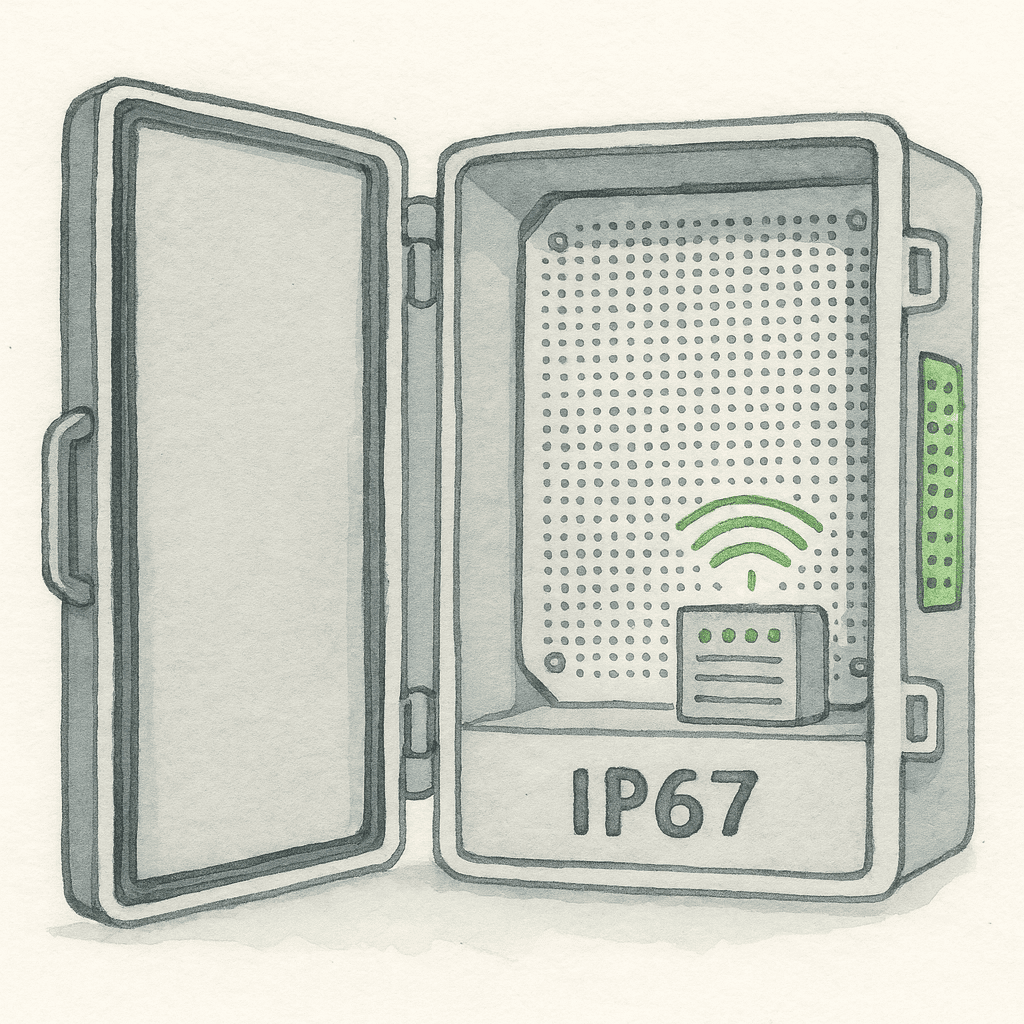
If you’re bringing landlubber electronics aboard, start by giving them a real enclosure — not a tackle box, not a sandwich container, and definitely not “the driest spot in the bilge.”
Use a proper IP‑rated polycarbonate or fiberglass enclosure. These won’t turn your gear into a slow‑roasted salmon fillet like metal boxes do under the sun.
Vent It, or Regret It
A sealed box without ventilation becomes a sous‑vide machine for circuit boards. Add a breathable vent plug — the marine equivalent of a porthole that lets air out but not water in — and mount the enclosure somewhere shaded so your electronics don’t sweat like a deckhand in July.
Seal the Cables Like Your Boat Depends on It
Water loves cables. It runs down them with the enthusiasm of a sailor heading for shore leave. Without proper cable glands and drip loops, water will find the one microscopic gap you missed and stroll right in.
Silicone alone? That’s just optimism in paste form.
Fight the Fog (Condensation Happens)
Even if you seal everything perfectly, condensation will still sneak in because the marine environment is basically a sauna with waves. Use desiccant packs, breather vents, and in colder climates, anti‑condensation heaters to keep your enclosure from turning into a tiny fog bank.
Respect Electricity — Seriously
Water and AC power are not shipmates. They’re sworn enemies. Use GFCI protection, keep power supplies dry, and call a real marine electrician — not your buddy who once rewired a bilge pump with duct tape and dreams.
Why Marine‑Rated Gear Still Wins
Even if you do everything right, your insurer may still insist on marine‑rated equipment. And honestly, they’re not wrong. Marine gear is built for corrosion, vibration, temperature swings, and the occasional “oops, that wave was bigger than I thought.”
So while you can protect non‑marine gear, the safest long‑term move — for your boat, your wallet, and your insurance premiums — is to use equipment that actually wants to live on the water.
Bottom Line
You can’t turn non‑IP67 gear into Poseidon‑proof tech, but you can give it a fighting chance with the right enclosure, ventilation, cable sealing, condensation control, and electrical safety.
Do it right and your electronics will survive spray, humidity, and the occasional rogue wave. Do it wrong and you’ve built a very expensive, very soggy lesson in marine engineering — plus a deeply uncomfortable chat with your insurance adjuster.
Leave a Reply